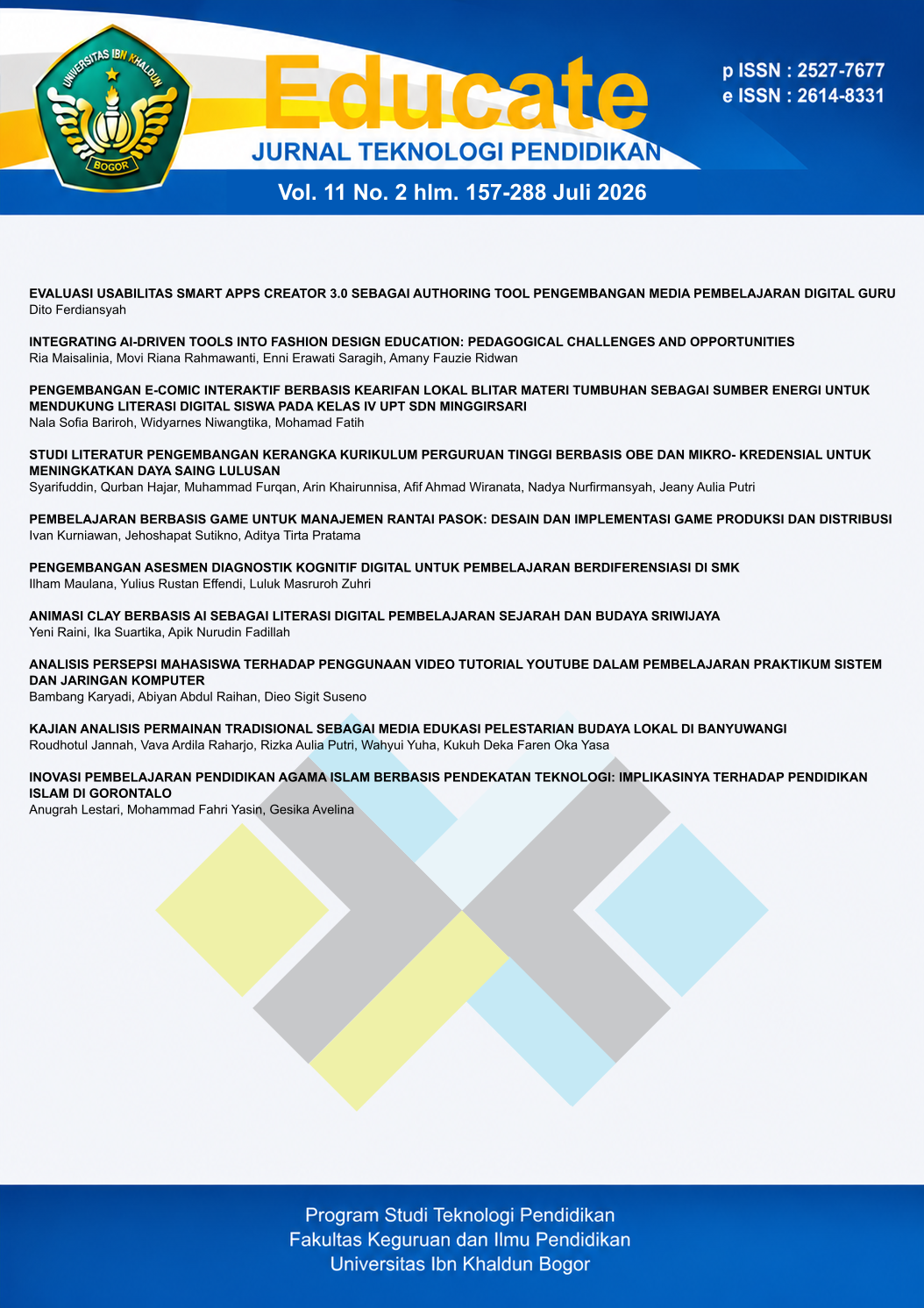
INOVASI PEMBELAJARAN PENDIDIKAN AGAMA ISLAM BERBASIS PENDEKATAN TEKNOLOGI: IMPLIKASINYA TERHADAP PENDIDIKAN ISLAM DI GORONTALO
DOI:
https://doi.org/10.32832/educate.v11i2.24754Kata Kunci:
Inovasi, Pembelajaran Berbasis Teknologi, Pendidikan Agama IslamAbstrak
Penelitian ini bertujuan untuk memetakan tren inovasi pembelajaran berbasis teknologi pada pembelajaran Pendidikan Agama Islam serta mengkaji implikasinya terhadap pendidikan Islam di Gorontalo. Metode penelitian Systematic Literature Review diterapkan dengan mengikuti protokol PRISMA, melalui Google Scholar, Garuda, SINTA, dan DOAJ untuk periode tahun 2020-2026. Penelusuran menghasilkan 34 artikel, yang terdiri dari 21 artikel dari sumber nasional bereputasi (SINTA 2-5) dan 13 artikel nasional. Hasil penelitian menunjukkan tren inovasi pada topik Sejarah Kebudayaan Islam mendominasi literatur (29%), mata pelajaran Al-Qur'an Hadis menjadi topik yang paling sedikit diteliti (9%). Dari segi komponen keinovasian kecenderungan pada media pembelajaran berbasis gamifikasi melalui Kahoot, Quizizz, dan Blooket serta lainnya, sementara inovasi pada tingkat kebijakan dan kurikulum masih sangat terbatas. Secara implikasi keinovasian pada pendidikan Islam di Gorontalo telah memiliki landasan digital melalui Madrasah Digital Report dan aplikasi Pusaka, namun pemanfaatannya untuk inovasi pedagogis pada mata pelajaran PAI khususnya Al-Qur'an Hadis masih kurang dan dapat dikembangkan lebih lanjut. Penelitian ini menyimpulkan bahwa pengembangan di masa depan perlu melampaui praktik kelas yang berpusat pada media menuju integrasi kebijakan dan kurikulum yang terstruktur.
Unduhan
Diterbitkan
Cara Mengutip
Terbitan
Bagian
Lisensi
Hak Cipta (c) 2026 Anugrah Lestari, Mohammad Fahri Yasin, Gesika Avelina

Artikel ini berlisensiCreative Commons Attribution-ShareAlike 4.0 International License.
Penulis memberikan hak cipta karyanya kepada jurnal yang dilisensikan dengan CC-BY-SA or The Creative Commons Attribution–ShareAlike License yang memungkinkan orang lain untuk menggunakan karya dengan pengakuan kepengarangan karya dan publikasi awal dalam jurnal ini.