Developing a Qur’anic mīzān-concept for ethical assessment in mathematics learning
DOI:
https://doi.org/10.32832/tadibuna.v14i5.21158Keywords:
Qur'anic principles, mīzān (balance), mathematics education, ethical assessment, Islamic pedagogyAbstract
Current mathematics assessment models prioritize academic standards over ethical values. This gap perpetuates reductionist and ethically devoid assessment. This study aims to establish a foundation for Qur'anic ethical assessment based on mizān and develop a conceptual framework for assessment in mathematics education. This theoretical-literature-thematic study analyzes five groups of the Qur'anic verses (namely: 7:85, 21:47, 42:17, 55:7-9, 57:25 ) with a critical-reflective approach to criticize the dominant culture in assessment. The analysis connects the mīzān-ethic principle with contemporary mathematical theory through an interdisciplinary synthesis. This study produces: (1) Mīzān in the Qur'an is a symbol of universal ethics. The mīzān-based assessment reflects moral values and integrity. The concept of ethical-Qur'anic assessment is a framework that unites spiritual, social, and individual aspects. (2) The concept of ethical-Qur'anic assessment should not only measure learning outcomes but also reflect the values of fairness, honesty, and balance. This assessment simultaneously and harmoniously combines cognitive, affective, and social competencies. Teachers not only test but also uphold ethical and character values. This assessment avoids bias and rejects discrimination, but fosters empathy to shape students to be active, value-conscious, and responsible individuals. This concept provides a new direction for assessment design in mathematics education.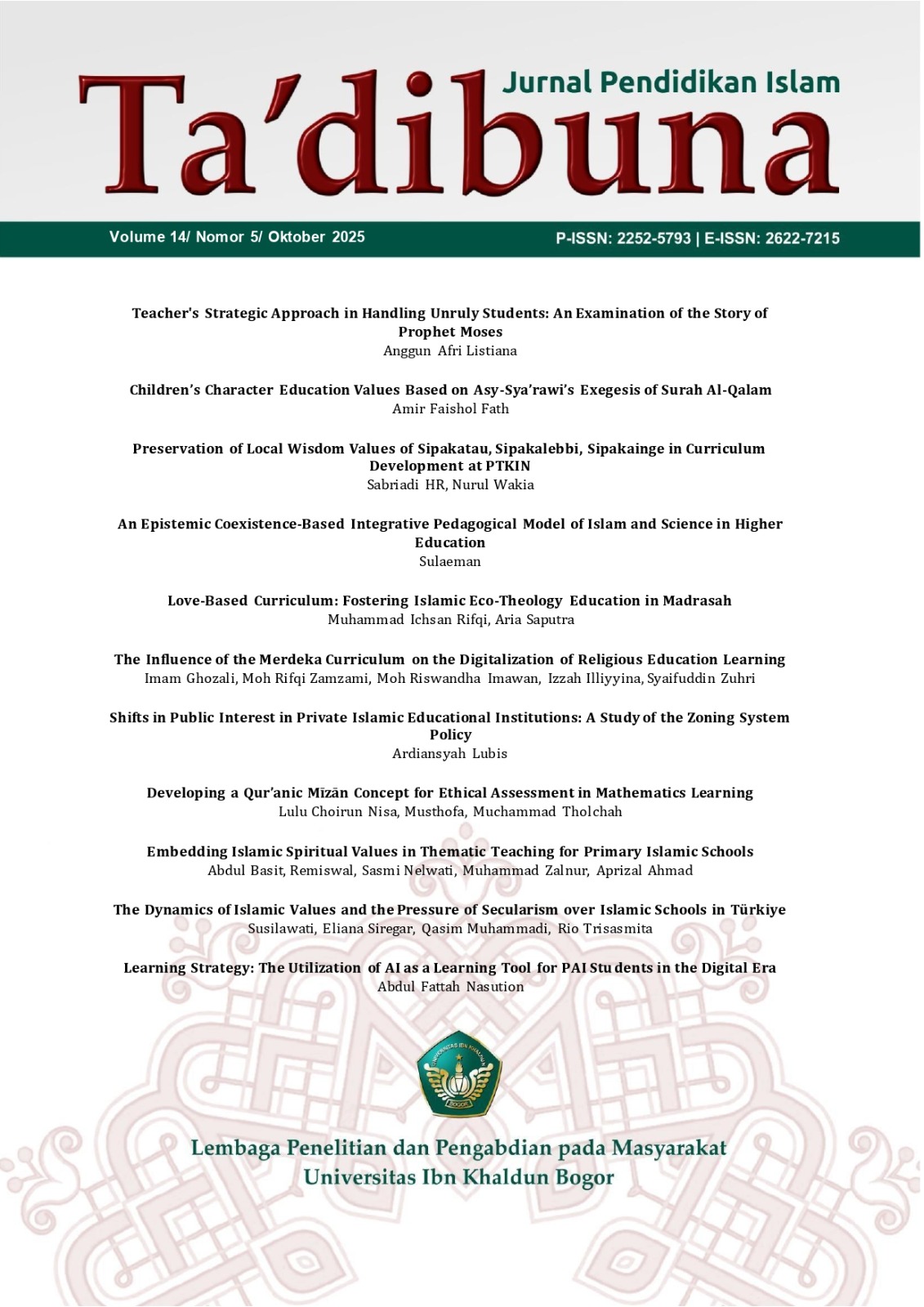
Downloads
Published
2025-11-02
How to Cite
Nisa, L. C., Musthofa, M., & Tholchah, M. (2025). Developing a Qur’anic mīzān-concept for ethical assessment in mathematics learning. Ta’dibuna: Jurnal Pendidikan Islam, 14(5), 585–604. https://doi.org/10.32832/tadibuna.v14i5.21158
Issue
Section
Artikel
License
Copyright (c) 2025 Ta'dibuna: Jurnal Pendidikan Islam

This work is licensed under a Creative Commons Attribution-ShareAlike 4.0 International License.
Penulis memberikan hak cipta karyanya kepada jurnal yang dilisensikan dengan CC-BY-SA or The Creative Commons Attribution–ShareAlike License yang memungkinkan orang lain untuk menggunakan karya dengan pengakuan kepengarangan karya dan publikasi awal dalam jurnal ini.