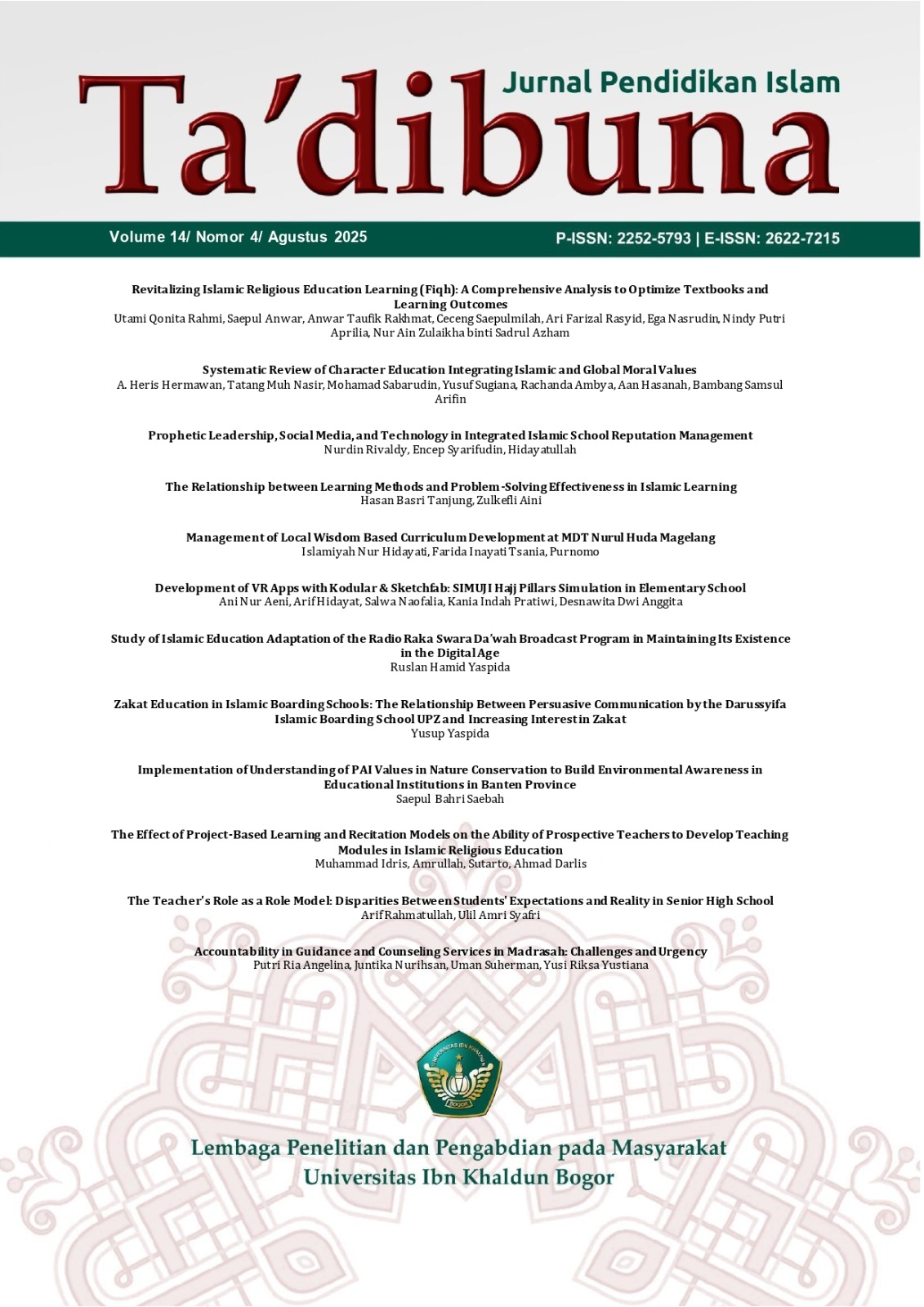
Revitalizing Islamic Religious Education Learning (Fiqh): A Comprehensive Analysis to OptimizeTextbooks and Learning Outcomes
DOI:
https://doi.org/10.32832/tadibuna.v14i4.19741Keywords:
Learning Revitalization;, PAI, Fiqh, Learning Outcomes; , Textbook Optimization.Abstract
Education needs to adapt to the times to remain relevant to the needs of students. One of the important components that must be considered is the teaching materials, including those in Islamic Religious Education (PAI). This research aims to formulate a strategy for revitalizing Islamic Education (PAI) learning in the D phase through optimizing textbooks that are more comprehensive, integrative, and effective in achieving learning outcomes (CP). Using a qualitative approach based on content analysis and literature review, this study identifies inconsistencies between the CP in the Kepka BSKAP and the Learning Objectives (TP) listed in the textbook. For example, the material on rukhsah only reflects the views of one specific school of thought, whereas CP aimsfor a broader understanding of the four major schools of thought. This finding confirms the need for developing more holistic materials to reflect the flexibility of Islamic law. Additionally, the learning models in the textbook are relevant to the psychological characteristics of 12–15-year-old students based on Piaget's theory of development. This research provides contributions in the form of strategic recommendations, including expanding the scope of teaching materials, integrating intersectional perspectives, and strengthening the connection with students' real-life experiences. The limitation of this research lies in the scope of the location and the limited sample size. Therefore, further research with a more comprehensive approach is needed to support the implementation of more effective and transformative fiqh learning
Downloads
Published
How to Cite
Issue
Section
License
Copyright (c) 2025 Ta'dibuna: Jurnal Pendidikan Islam

This work is licensed under a Creative Commons Attribution-ShareAlike 4.0 International License.
Penulis memberikan hak cipta karyanya kepada jurnal yang dilisensikan dengan CC-BY-SA or The Creative Commons Attribution–ShareAlike License yang memungkinkan orang lain untuk menggunakan karya dengan pengakuan kepengarangan karya dan publikasi awal dalam jurnal ini.